Home Uncategorized
Category:

Uncategorized

Advertisement

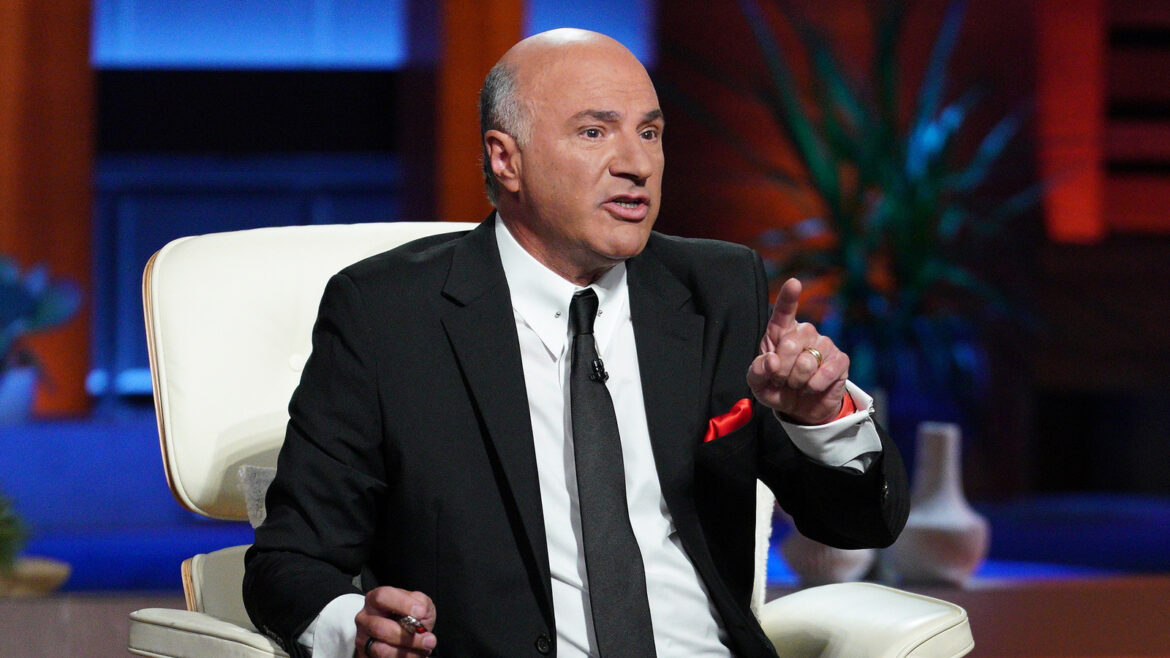
Kevin O’Leary is used to taking big risks and openly defending his decisions.

However, one of the Shark Tank star’s most ambitious projects—a massive data center for artificial intelligence in Utah—has faced opposition that has turned a promising investment story into a serious public conflict.

The Stratos project is intended to be part of a new AI infrastructure. When fully developed, its capacity could reach nine gigawatts—a colossal figure even by American standards. O’Leary argues that the U.S. needs facilities like this to compete in the field of artificial intelligence, but local residents are far more concerned about the potential impacts on the power grid, water supply, the environment, and taxpayers.

The conflict turned out to be more serious than expected

The situation escalated after O’Leary publicly suggested that outside interests, including possible Chinese influence, might be behind some of the opposition to the project. No evidence was presented linking specific opponents of the project to China, and some of his statements subsequently became the subject of legal proceedings.

Several opponents of Stratos filed a defamation lawsuit against O’Leary and Fox News, claiming that the statements made damaged their reputations. O’Leary is seeking to have the case dismissed, and his attorneys insist that the controversial remarks must be viewed in the context of a heated public debate. No final decision on the merits of the claims has been reached yet.

There’s a much bigger bet behind this for O’Leary

The businessman’s main idea isn’t simply to build a single data center. O’Leary believes that artificial intelligence will create enormous demand for electricity and computing power, so it’s necessary to invest not only in technology companies but also in the infrastructure without which they cannot operate.

That is precisely why he is increasingly interested in the energy sector, gas infrastructure, uranium, and the potential development of small modular nuclear reactors. O’Leary is essentially betting that one of the main constraints on the AI revolution will not be a lack of new AI models, but a shortage of cheap and stable energy.

At the same time, he has resumed investing in digital assets. In September, O’Leary announced that he is once again buying cryptocurrencies and preparing for the next phase of the market’s development, with a particular focus on the potential adoption of blockchain by major financial institutions.

O’Leary Hasn’t Given Up on His Strategy Yet

Despite the opposition surrounding Stratos, there are no signs that O’Leary intends to back down from his big bet on AI infrastructure. The problem lies elsewhere: the situation in Utah has shown that even massive capital and a high-profile name do not guarantee a smooth project implementation.

The investment idea, which looked fairly simple on paper—artificial intelligence will require more data centers and more energy—has run into political opposition, resistance from local residents, and legal disputes.

For O’Leary, this is becoming a major test. At 72, he continues to make big bets on AI, energy, and digital assets, but now one of his most high-profile projects is revealing the downside of his aggressive investment philosophy.
O’Leary himself remains convinced that the world will need a massive amount of new energy infrastructure to advance artificial intelligence. Therefore, the key question now is no longer whether he is willing to take risks, but whether he will be able to carry out his plans when resistance arises far beyond the financial markets.
Advertisement

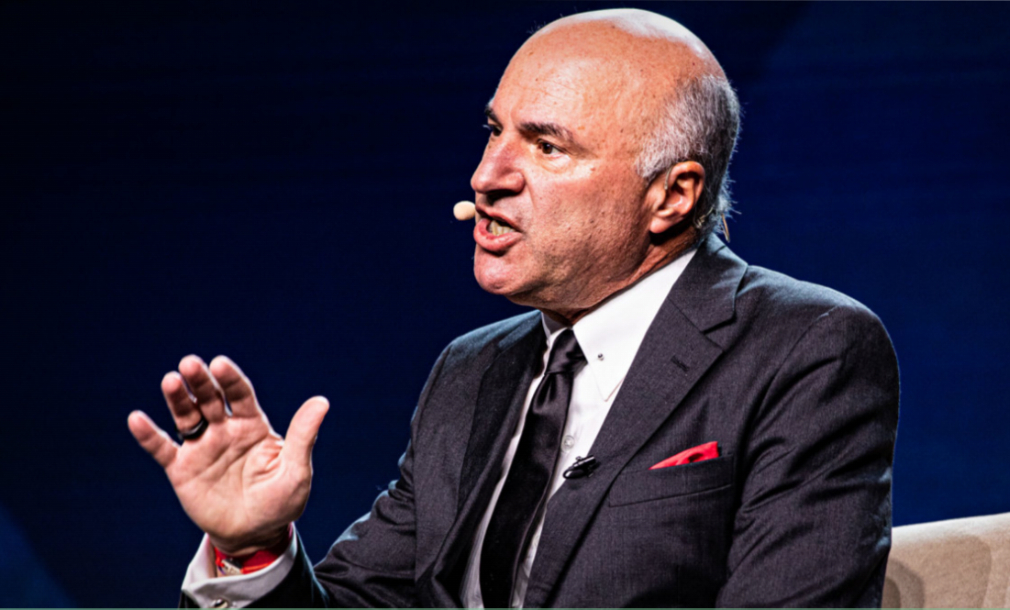
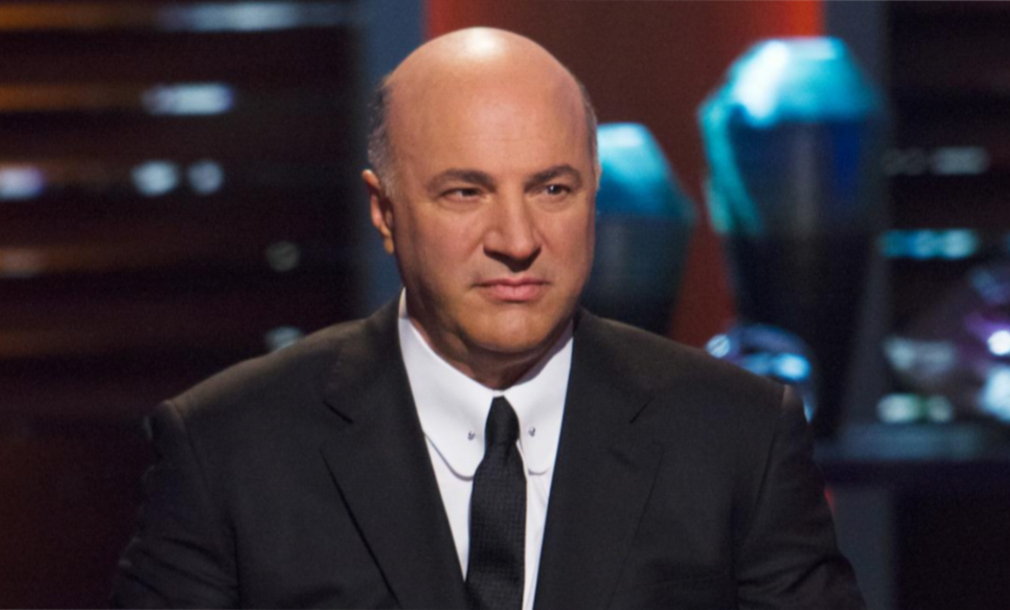
Kevin O’Leary has spent decades cultivating one of the most recognisable personalities in business television. To millions of Shark Tank viewers, “Mr. Wonderful” is the investor who rarely hesitates, dislikes excuses and is perfectly comfortable telling an entrepreneur that an idea simply isn’t going to work.

That image has made O’Leary famous, but it has also concealed a more complicated story. In a series of recent appearances, the Canadian businessman has spoken more openly about decisions from his past, including failures, difficult relationships and moments when his confidence did not necessarily produce the right answer.

At the same time, O’Leary has begun changing some of his investment positions. He is again putting money into cryptocurrency and has acknowledged that some of his earlier assumptions about the development of blockchain technology were wrong.

Taken together, the comments offer a somewhat different picture of the businessman audiences thought they already knew.

A Different Side of Kevin O’Leary

During a lengthy conversation with fellow Shark Tank investor Daniel Lubetzky, O’Leary discussed subjects that rarely appear during his television appearances. The conversation moved from entrepreneurship into his childhood, marriage, friendships and some of the decisions he made before becoming wealthy.

One particularly personal story concerned his relationship with Linda, the woman he would later marry. O’Leary discussed being unfaithful while they were engaged and having to confront the possibility that the relationship could end.

The couple ultimately remained together and married, but O’Leary’s decision to discuss the episode publicly decades later provided an unusual glimpse behind his carefully constructed television persona.

The significance of the story was not that some previously hidden scandal had suddenly been uncovered. O’Leary himself chose to discuss it. What made it interesting was hearing someone whose public philosophy revolves around discipline and rational decision-making describe an occasion when his own behaviour nearly cost him one of the most important relationships in his life.

Success Also Cost Him a Friendship

O’Leary also revisited another painful decision from the early stages of his business career.

Before television and celebrity transformed him into Mr. Wonderful, he was attempting to build a software company. Like many young entrepreneurs, he worked with people he already knew and trusted. Eventually, however, he concluded that one of those relationships was no longer working professionally.

The person involved was his best friend.

O’Leary ultimately fired him.

It is the kind of decision that sounds straightforward when reduced to the philosophy he frequently presents on television: if somebody is preventing a company from succeeding, the needs of the business must come first. Living through that decision was more complicated.

The episode helps explain why O’Leary later became so uncompromising about separating personal relationships from business decisions. Some of the lessons he now delivers to entrepreneurs were not developed in a television studio. He learned them through experiences that carried consequences long after the immediate business problem disappeared.

Long Before the Money, His Future Looked Very Different

O’Leary’s path to wealth was also far less obvious than his later success might suggest.

As a young man, he was deeply interested in photography and initially imagined building a future around it. His stepfather challenged that ambition and questioned whether photography could provide the kind of career O’Leary wanted.

Eventually, O’Leary changed direction. He pursued business studies and later founded SoftKey Software Products in Toronto.

SoftKey expanded through acquisitions and eventually became The Learning Company. In 1999, Mattel acquired the business in a multibillion-dollar transaction.

That deal helped establish the financial foundation for the career that followed, although the acquisition itself later became notorious for Mattel after the business performed badly under its ownership.

For O’Leary, however, the experience reinforced a philosophy that still appears throughout his public comments: changing direction is not necessarily an admission of defeat. Sometimes refusing to change is the more expensive mistake.

That Philosophy Is Appearing Again

More than two decades later, O’Leary is applying essentially the same principle to cryptocurrency.

He recently disclosed that he has begun buying digital assets again after pulling back during a difficult period for the market. He described himself as being “back in the saddle,” signalling renewed interest in the sector.

More interestingly, O’Leary has acknowledged that his understanding of where blockchain technology was heading has changed.

Around a year and a half earlier, he expected Ethereum to become the dominant infrastructure around which much of the industry would consolidate. He no longer appears convinced that the future will be that simple.

Instead, O’Leary now expects different blockchain networks to compete for different institutional applications. Banks, exchanges and other financial institutions could ultimately determine which technologies become important by deciding which networks they actually use.

For an investor known for speaking with extraordinary confidence, the admission is notable. O’Leary is effectively acknowledging that his original thesis did not develop exactly as expected — and adjusting his money accordingly.

O’Leary Is Betting on a Much Bigger Transformation

His renewed interest in digital assets does not mean he is simply betting on another speculative cryptocurrency boom. O’Leary has increasingly framed blockchain as infrastructure that could eventually become integrated into conventional finance.

He has suggested that digital assets could evolve into something resembling another major sector of the financial system rather than remaining an isolated market dominated by speculation.

That possibility is central to his current investment thesis. If major financial institutions begin moving settlement, payments or other services onto blockchain networks, the companies providing that infrastructure could become substantially more important.

There is no guarantee that O’Leary’s prediction will prove correct. He has changed his mind about the sector before, and the cryptocurrency market remains exceptionally volatile.

But that uncertainty does not appear to bother him. In fact, it is often precisely what attracts him.

His Biggest Bets Are Already Creating Controversy

Cryptocurrency is only one part of O’Leary’s current strategy. He has also become increasingly involved in enormous artificial-intelligence infrastructure projects, particularly data centres capable of supplying the computing power required by AI companies.

Those ambitions have not developed without resistance.

A proposed data-centre development associated with O’Leary in Utah generated opposition from residents concerned about electricity consumption, water use and the environmental consequences of such a large project.

O’Leary responded aggressively to some of the criticism. He suggested that outside interests could be encouraging opposition and made claims about protesters being paid to participate. Reporting subsequently challenged those allegations, and O’Leary acknowledged that he did not possess evidence tying specific protest organisations to such activity.

The episode was a reminder that the uncompromising style that works extremely well on television can produce very different consequences when billions of dollars, local communities and major infrastructure projects are involved.

The Public Image and the Private Reality Are Not Always the Same

This is what makes O’Leary’s recent comments particularly interesting.

For years, audiences have seen a carefully defined version of him. Mr. Wonderful understands money. Mr. Wonderful does not tolerate weakness. Mr. Wonderful makes the decision and moves on.

His own recollections reveal something more complicated.

O’Leary has made personal decisions he regrets. He has ended professional relationships that were personally important to him. He has pursued ideas that did not work. He has changed investment theses after discovering that the market was developing differently from what he expected.

None of that undermines his success. If anything, it helps explain the philosophy he developed from it.

O’Leary’s real advantage may not be that he is always right. It may be his willingness to abandon a position once he concludes that being right about it no longer matters.

There Is No Secret Leak — But There Are Real Revelations

That distinction is important because some of the more dramatic claims circulating around celebrities and business figures can easily create a misleading impression.

There is no verified evidence of a secret scandal about Kevin O’Leary that was concealed for more than a year and suddenly leaked. There is also no confirmed personal tragedy involving him behind these recent reports.

What has actually happened is subtler.

O’Leary himself has become more willing to discuss parts of his history that rarely fitted the Mr. Wonderful character, while simultaneously revealing changes in where he believes some of the biggest investment opportunities now exist.

Those two developments make the current moment interesting without requiring an invented scandal.

Kevin O’Leary Is Still Taking Risks

At 72, O’Leary is not behaving like a businessman preparing to quietly step away.

He continues to invest, remains involved in major AI infrastructure proposals and is again allocating money to digital assets. He is also still willing to make predictions that could eventually prove either remarkably prescient or completely wrong.

But his recent comments make the story more human than the familiar television version.

The businessman who built a career telling other people that mistakes have consequences has made plenty of his own. The investor famous for certainty has changed his mind repeatedly. And the television personality who appears almost entirely unemotional can still recall decisions from decades ago because of what they cost him personally.

Perhaps that is the more interesting truth about Kevin O’Leary.

His career was not built by avoiding every mistake. It was built by surviving them, deciding what they taught him and being willing to change direction when the evidence no longer supported the original plan.

And despite decades of success, O’Leary is still doing exactly that.

Advertisement

Kevin O’Leary is not someone who frequently retreats from a political opinion.

The Canadian businessman has built much of his public reputation on doing exactly the opposite: taking a position, defending it aggressively and rarely worrying about whether everyone agrees.

That is why his latest comments about Canadian Prime Minister Mark Carney are particularly striking.

After months of scepticism about Canada’s new political direction, O’Leary has openly acknowledged something few expected from him.

He has changed his mind.

And the reason reveals a much bigger story about what O’Leary believes could happen to the Canadian economy next.

O’Leary Was One of Carney’s Sceptics

When Mark Carney emerged as Canada’s new political leader, O’Leary was hardly enthusiastic.

He had spent years criticising the economic policies pursued under Justin Trudeau and repeatedly argued that Canada had become increasingly unattractive to investors.

For O’Leary, the fundamental problem was capital.

Canada possesses enormous natural resources, a highly educated workforce and direct access to the world’s largest economy.

Yet he believed government policy had discouraged investors from putting enough money into the country.

Initially, O’Leary questioned whether Carney would represent meaningful change.

His criticism was characteristically simple.

“Trudeau 2.0.”

But something has changed.

Then O’Leary Said Something Unexpected

Asked recently whether his assessment of Carney had changed, O’Leary did not attempt to avoid the question.

He said it had.

His explanation was equally direct:

“When facts change, I change.”

O’Leary went on to reject his own earlier characterisation of Carney as another Trudeau.

“He’s not Trudeau 2.0,” O’Leary said, before describing the prime minister as highly intelligent.

Coming from O’Leary, that is a significant reversal.

It does not mean he suddenly agrees with everything the government is doing.

But he has identified something in Carney’s economic strategy that he believes deserves attention.

It Comes Down to Money Returning to Canada

O’Leary’s central concern is investment.

For years, he has argued that Canada needs considerably more private capital if it wants to develop its natural resources and increase productivity.

He now believes Carney understands that problem.

O’Leary pointed specifically to efforts to bring international investors and sovereign wealth funds to Canada and present them with major projects ready for investment.

His reaction was unusually enthusiastic.

He called the approach “brilliant” and “really smart.”

Why?

Because O’Leary believes some of the world’s largest pools of capital have spent years overlooking Canada.

Getting them interested again could fundamentally change the country’s economic trajectory.

Canada Has Something the World Wants

O’Leary’s optimism also comes from something that cannot easily be changed by an election, government or trade dispute.

Geography.

Canada possesses extraordinary quantities of oil, natural gas, minerals, potash and other strategic resources.

O’Leary recently described Canada as potentially the richest country in the world on a per-capita basis — with one major qualification:

Much of that wealth is still underground.

For decades, the political argument has revolved around how much of those resources Canada should develop and how quickly.

O’Leary’s argument is different.

He believes the geopolitical environment may increasingly force the issue.

Energy security has become more important.

Critical minerals have become strategically valuable.

Countries want reliable suppliers.

And the United States remains deeply dependent on Canadian resources.

That gives Canada leverage O’Leary believes many people underestimate.

But There Is a Huge Problem Standing in the Way

The United States.

Canada’s relationship with its largest trading partner has deteriorated sharply.

Trade negotiations collapsed in August, and the tariff confrontation between Washington and Ottawa has escalated.

On September 1, Carney said negotiations could resume only when the United States was prepared to engage seriously and respectfully.

The economic consequences are already becoming visible.

Canada’s merchandise trade surplus fell from C$4.2 billion in June to just C$769 million in July.

Exports to the United States dropped 6.6%.

And the U.S. still receives roughly two-thirds of all Canadian merchandise exports.

Those numbers explain why O’Leary’s new optimism comes with an enormous warning.

He Thinks 50% Tariffs Could Become Extremely Painful

O’Leary does not believe Canada can simply live indefinitely with tariffs at current levels.

His argument is that neither side can.

Canada is too dependent on access to American consumers.

But many American states and industries are also deeply integrated with Canadian supply chains.

That means a prolonged trade war would eventually inflict economic damage on both sides.

O’Leary has warned that maintaining 50% tariffs could push Canada toward recession.

Consumers would eventually feel it too.

Higher costs do not remain trapped inside customs declarations and corporate balance sheets forever.

They work their way through supply chains.

Businesses pay more.

Margins shrink.

Prices rise.

And households eventually see the result.

That Is Why O’Leary Thinks the Confrontation Will End

This is perhaps the most important part of his prediction.

O’Leary does not believe Canada and the United States are heading toward permanent economic separation.

He believes the opposite.

The two economies are simply too intertwined.

Canada supplies resources America needs.

American consumers provide a market Canadian businesses need.

Factories operate through integrated North American supply chains.

O’Leary has therefore argued that despite the political hostility, the two countries will ultimately find their way back together.

His prediction is that economic reality eventually becomes stronger than political rhetoric.

Whether he is correct remains to be seen.

And That Creates an Unusual Investment Argument

This is where O’Leary’s political analysis becomes an investment thesis.

If the dispute is permanent, Canadian assets could face a fundamentally different future.

But if the confrontation is temporary, today’s uncertainty may be depressing valuations that eventually recover.

O’Leary is betting on the second scenario.

He estimates the most intense disruption could last around 60 to 90 days and believes investors willing to enter during the turmoil could potentially benefit substantially over the following five years.

There is obviously no guarantee that his timetable will prove correct.

Markets can fall further.

Trade negotiations can fail.

Political conflicts can last far longer than investors expect.

But O’Leary is looking beyond the immediate headlines.

His Five Rules Explain How He Thinks

Interestingly, O’Leary’s latest advice to investors shows that his optimism does not mean abandoning caution.

He recently outlined five principles he considers fundamental to protecting wealth.

Do not become excessively concentrated in a single investment.

Control debt.

Maintain liquidity.

Protect principal and rely on cash flow.

And avoid investments that produce nothing.

The philosophy is revealing.

O’Leary may be willing to invest during chaos, but he does not advocate simply gambling that everything will recover.

For him, opportunity and risk management have to exist together.

Something Bigger Has Changed

That is what makes his reversal on Carney important.

O’Leary has not suddenly become an uncritical supporter of the Canadian government.

He remains deeply concerned about tariffs.

He continues to believe Canada needs much more investment.

And he still thinks significant economic risks lie ahead.

What has changed is his assessment of the person trying to navigate them.

Carney’s willingness to court global capital and develop Canada’s economic assets appears to have convinced O’Leary that the government may finally be moving in a direction he has advocated for years.

Kevin O’Leary Is Making a Bet on Canada

Perhaps the most surprising element is what this means for O’Leary himself.

For years, some of his strongest comments about Canada focused on what the country was doing wrong.

Now his attention is increasingly turning toward what could happen if it gets things right.

Canada possesses the resources.

It has access to enormous markets.

And global instability is making many of those resources more strategically important.

The missing ingredient, in O’Leary’s view, has been capital.

If that capital begins returning, he believes the economic story could change dramatically.

That is why his latest comments are about considerably more than whether he likes Mark Carney.

Kevin O’Leary has changed his assessment because he believes Canada itself may be approaching a turning point.

He could be wrong.

The tariff conflict could deteriorate further, investment could fail to materialise and Canada’s structural economic problems will not disappear overnight.

But O’Leary has already decided where he thinks the puck is going.

And this time, he is betting on Canada.

Advertisement

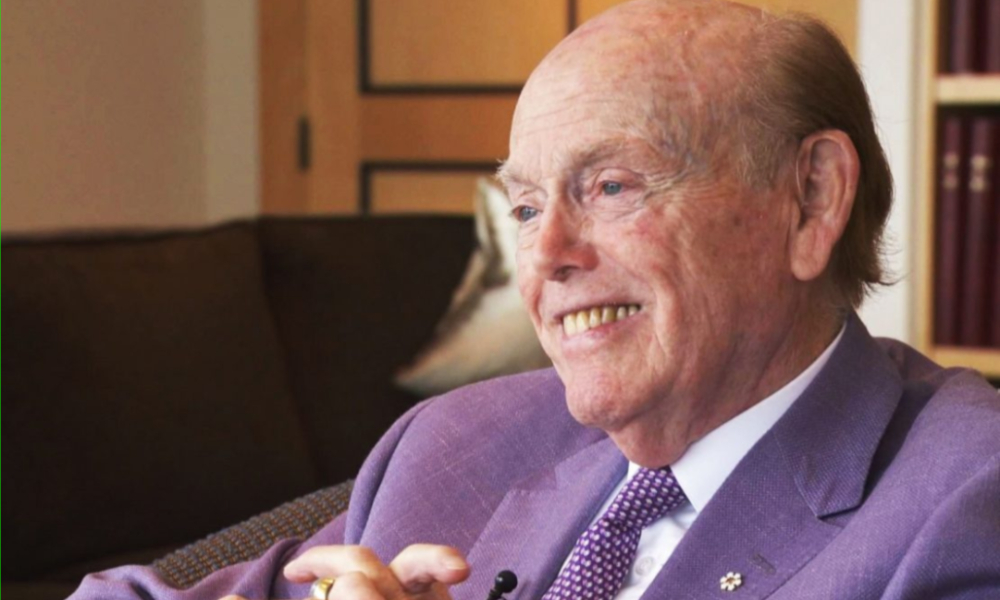
For many decades, the name Jim Pattison has been associated with one of Canada’s largest private businesses. Consequently, every public appearance he makes invariably attracts interest not only from entrepreneurs but also from those who closely follow the state of the country’s economy.

During one of his recent business events, the businessman once again shared his views on corporate development, long-term investment and the changes currently taking place in the Canadian economy.

It was these comments that sparked a new wave of discussion.

The Conversation Was Not Just About Business

Although the main focus was on issues relating to the management of large companies, Jim Pattison touched on topics several times that are of concern to a much wider audience today.

He noted that the economic situation requires greater flexibility from businesses, and that the ability to adapt quickly is becoming one of the key factors for long-term success.

According to him, it is consistent decision-making that helps companies maintain stability during periods of uncertainty.

Why His Words Resonated So Strongly

The public has long been accustomed to the fact that Jim Pattison rarely makes bold statements.

This is precisely why each of his public appearances attracts the attention of business publications and economic commentators.

Following the first reports, many began discussing not individual quotes, but the entrepreneur’s overall view of the development of the Canadian economy and the future of large companies.

The Long-Term Outlook Became the Main Theme

During his speech, Pattison repeatedly emphasised the importance of strategic planning.

In his view, short-term changes in the market should not distract the company from its long-term goals.

It is precisely this approach, as many analysts believe, that remains one of the reasons for the stable growth of his business group over many decades.

Why Interest in the Story Persists

Economic issues continue to be one of the most discussed topics in Canada.

Consequently, any comments made by prominent business figures inevitably become part of a wider public debate.

For some, Jim Pattison’s speech provided an opportunity to hear the views of one of the country’s most experienced entrepreneurs.

For others, it was a reason to reflect once again on the qualities that help companies thrive in a rapidly changing economy.

What Commentators Are Saying

According to business journalists, such public statements provide a better understanding of how Canada’s largest companies assess the current economic situation.

Although Jim Pattison did not make any sensational statements, his assessments once again captured the audience’s attention and became part of the discussion on the future of Canadian business.

This is precisely why interest in his latest comments continues even after the event has ended.

Advertisement

logo-white

Disclaimer

The content published on this website is provided for general informational purposes only. While we strive to keep the information accurate and up to date, we make no representations regarding its accuracy, completeness, or suitability. Readers are responsible for how they use the information found on this site.

All rights reserved © 2026