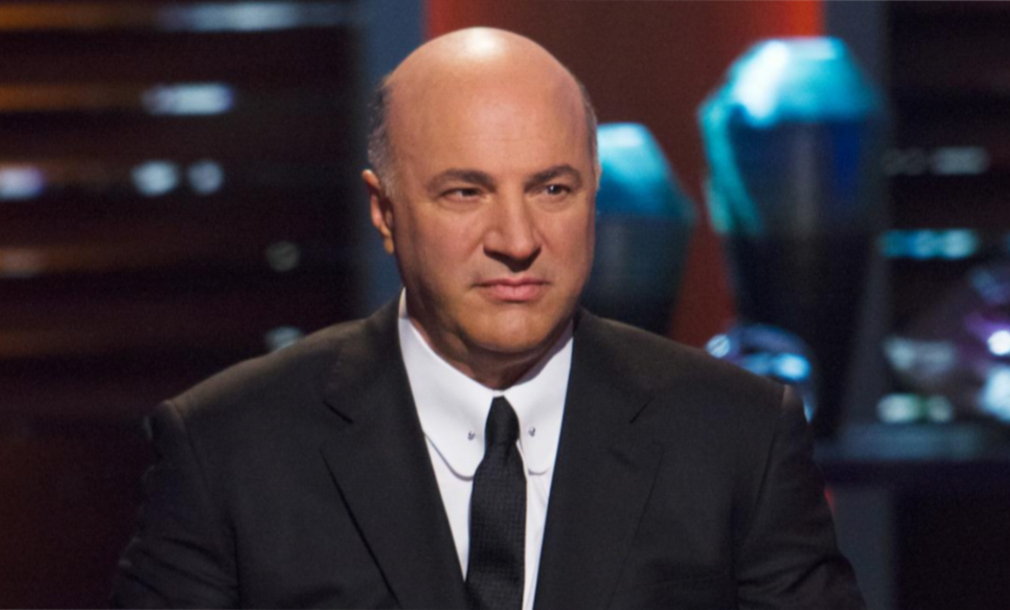
Kevin O’Leary is not someone who frequently retreats from a political opinion.
Advertisement
The Canadian businessman has built much of his public reputation on doing exactly the opposite: taking a position, defending it aggressively and rarely worrying about whether everyone agrees.
That is why his latest comments about Canadian Prime Minister Mark Carney are particularly striking.
After months of scepticism about Canada’s new political direction, O’Leary has openly acknowledged something few expected from him.
He has changed his mind.
And the reason reveals a much bigger story about what O’Leary believes could happen to the Canadian economy next.
O’Leary Was One of Carney’s Sceptics
When Mark Carney emerged as Canada’s new political leader, O’Leary was hardly enthusiastic.
He had spent years criticising the economic policies pursued under Justin Trudeau and repeatedly argued that Canada had become increasingly unattractive to investors.
For O’Leary, the fundamental problem was capital.
Canada possesses enormous natural resources, a highly educated workforce and direct access to the world’s largest economy.
Yet he believed government policy had discouraged investors from putting enough money into the country.
Initially, O’Leary questioned whether Carney would represent meaningful change.
His criticism was characteristically simple.
“Trudeau 2.0.”
But something has changed.
Then O’Leary Said Something Unexpected
Asked recently whether his assessment of Carney had changed, O’Leary did not attempt to avoid the question.
He said it had.
His explanation was equally direct:
“When facts change, I change.”
O’Leary went on to reject his own earlier characterisation of Carney as another Trudeau.
“He’s not Trudeau 2.0,” O’Leary said, before describing the prime minister as highly intelligent.
Coming from O’Leary, that is a significant reversal.
It does not mean he suddenly agrees with everything the government is doing.
But he has identified something in Carney’s economic strategy that he believes deserves attention.
It Comes Down to Money Returning to Canada
O’Leary’s central concern is investment.
For years, he has argued that Canada needs considerably more private capital if it wants to develop its natural resources and increase productivity.
He now believes Carney understands that problem.
O’Leary pointed specifically to efforts to bring international investors and sovereign wealth funds to Canada and present them with major projects ready for investment.
His reaction was unusually enthusiastic.
He called the approach “brilliant” and “really smart.”
Why?
Because O’Leary believes some of the world’s largest pools of capital have spent years overlooking Canada.
Getting them interested again could fundamentally change the country’s economic trajectory.
Canada Has Something the World Wants
O’Leary’s optimism also comes from something that cannot easily be changed by an election, government or trade dispute.
Geography.
Canada possesses extraordinary quantities of oil, natural gas, minerals, potash and other strategic resources.
O’Leary recently described Canada as potentially the richest country in the world on a per-capita basis — with one major qualification:
Much of that wealth is still underground.
For decades, the political argument has revolved around how much of those resources Canada should develop and how quickly.
O’Leary’s argument is different.
He believes the geopolitical environment may increasingly force the issue.
Energy security has become more important.
Critical minerals have become strategically valuable.
Countries want reliable suppliers.
And the United States remains deeply dependent on Canadian resources.
That gives Canada leverage O’Leary believes many people underestimate.
But There Is a Huge Problem Standing in the Way
The United States.
Canada’s relationship with its largest trading partner has deteriorated sharply.
Trade negotiations collapsed in August, and the tariff confrontation between Washington and Ottawa has escalated.
On September 1, Carney said negotiations could resume only when the United States was prepared to engage seriously and respectfully.
The economic consequences are already becoming visible.
Canada’s merchandise trade surplus fell from C$4.2 billion in June to just C$769 million in July.
Exports to the United States dropped 6.6%.
And the U.S. still receives roughly two-thirds of all Canadian merchandise exports.
Those numbers explain why O’Leary’s new optimism comes with an enormous warning.
He Thinks 50% Tariffs Could Become Extremely Painful
O’Leary does not believe Canada can simply live indefinitely with tariffs at current levels.
His argument is that neither side can.
Canada is too dependent on access to American consumers.
But many American states and industries are also deeply integrated with Canadian supply chains.
That means a prolonged trade war would eventually inflict economic damage on both sides.
O’Leary has warned that maintaining 50% tariffs could push Canada toward recession.
Consumers would eventually feel it too.
Higher costs do not remain trapped inside customs declarations and corporate balance sheets forever.
They work their way through supply chains.
Businesses pay more.
Margins shrink.
Prices rise.
And households eventually see the result.
That Is Why O’Leary Thinks the Confrontation Will End
This is perhaps the most important part of his prediction.
O’Leary does not believe Canada and the United States are heading toward permanent economic separation.
He believes the opposite.
The two economies are simply too intertwined.
Canada supplies resources America needs.
American consumers provide a market Canadian businesses need.
Factories operate through integrated North American supply chains.
O’Leary has therefore argued that despite the political hostility, the two countries will ultimately find their way back together.
His prediction is that economic reality eventually becomes stronger than political rhetoric.
Whether he is correct remains to be seen.
And That Creates an Unusual Investment Argument
This is where O’Leary’s political analysis becomes an investment thesis.
If the dispute is permanent, Canadian assets could face a fundamentally different future.
But if the confrontation is temporary, today’s uncertainty may be depressing valuations that eventually recover.
O’Leary is betting on the second scenario.
He estimates the most intense disruption could last around 60 to 90 days and believes investors willing to enter during the turmoil could potentially benefit substantially over the following five years.
There is obviously no guarantee that his timetable will prove correct.
Markets can fall further.
Trade negotiations can fail.
Political conflicts can last far longer than investors expect.
But O’Leary is looking beyond the immediate headlines.
His Five Rules Explain How He Thinks
Interestingly, O’Leary’s latest advice to investors shows that his optimism does not mean abandoning caution.
He recently outlined five principles he considers fundamental to protecting wealth.
Do not become excessively concentrated in a single investment.
Control debt.
Maintain liquidity.
Protect principal and rely on cash flow.
And avoid investments that produce nothing.
The philosophy is revealing.
O’Leary may be willing to invest during chaos, but he does not advocate simply gambling that everything will recover.
For him, opportunity and risk management have to exist together.
Something Bigger Has Changed
That is what makes his reversal on Carney important.
O’Leary has not suddenly become an uncritical supporter of the Canadian government.
He remains deeply concerned about tariffs.
He continues to believe Canada needs much more investment.
And he still thinks significant economic risks lie ahead.
What has changed is his assessment of the person trying to navigate them.
Carney’s willingness to court global capital and develop Canada’s economic assets appears to have convinced O’Leary that the government may finally be moving in a direction he has advocated for years.
Kevin O’Leary Is Making a Bet on Canada
Perhaps the most surprising element is what this means for O’Leary himself.
For years, some of his strongest comments about Canada focused on what the country was doing wrong.
Now his attention is increasingly turning toward what could happen if it gets things right.
Canada possesses the resources.
It has access to enormous markets.
And global instability is making many of those resources more strategically important.
The missing ingredient, in O’Leary’s view, has been capital.
If that capital begins returning, he believes the economic story could change dramatically.
That is why his latest comments are about considerably more than whether he likes Mark Carney.
Kevin O’Leary has changed his assessment because he believes Canada itself may be approaching a turning point.
He could be wrong.
The tariff conflict could deteriorate further, investment could fail to materialise and Canada’s structural economic problems will not disappear overnight.
But O’Leary has already decided where he thinks the puck is going.
And this time, he is betting on Canada.